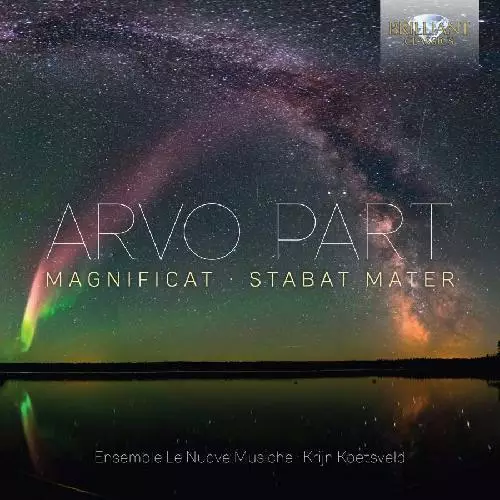
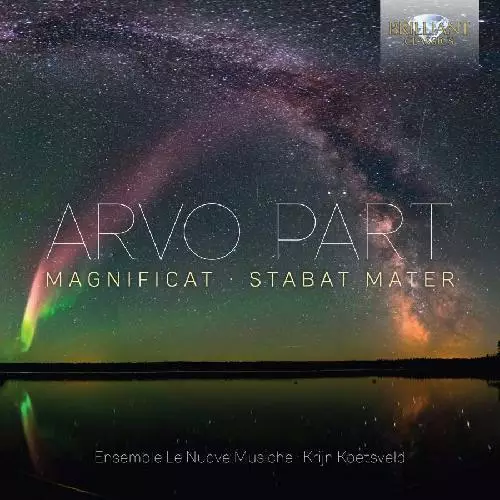
Pärt, Arvo - Magnificat; Stabat Mater - Koetsveld, Krijn / Le Nuove Musiche
- Product Code: 95807
- Product temporarily out of stock
Under the leadership of its founder and director Krijn Koetsveld, Le Nuove Musiche has gained international recognition for its complete recording of Monteverdi's madrigals, a project that took over a decade to complete and was recently released in its entirety by Brilliant Classics (BC95661). Now the ensemble is turning its attention to the contemporary master of concert song, Arvo Pärt. The styles of these two composers could hardly be more different: Monteverdi's madrigals are so rich and complex that they speak of earthly love and pain, while Pärt evokes a world of silence and serenity. As Koetsveld points out in the introduction to his booklet, his music seems so simple. Just a few notes, repeating harmonies, often an extremely slow tempo, declamation on a note or chord. No complex patterns, but many surprisingly dissonant harmonies or extremely complex melodies. Where does that fascinating, intoxicating atmosphere come from, which many cherish and rave about? In his 1989 Magnificat, Pärt cloaked the text in a free declamatory style, relying on notes, dissonance, or a simple harmonic world. He expresses Mary's hymn softly, almost shyly, as if the defining image of the text were Mary quietly rejoicing at the news that she is carrying the Son of God. The Nunc dimittis was composed separately, 12 years later, but its unhurried opening in Simeon's song perfectly complements the Magnificat. In both the Seven Magnificat Antiphons (1988, 1991) and the Stabat mater (1985), fewer notes are used in the service of a more austere sound world, which may transport the listener back to the vast spaces of a medieval cathedral and the daily services held there. For 25 minutes, Stabat mater lingers in a haunting, eolian mood, as if musically imitating Mary quietly mourning her son at the foot of the cross.

